we are one of the surf camps in this comparison, so you should know that before reading any further. We have done our best to write about the other camps honestly — based on their public information and what their guests say about them — and to let the numbers speak for themselves. If Sōleïa is not the right fit for you, this article will still help you find the camp that is.
This guide is for people who are planning their first surf trip and are trying to make sense of what looks like very similar options. A week in a Canggu surf camp. Some combination of lessons, accommodation, yoga, and social life. Similar photos of pools and tropical gardens. Wildly different prices. What are you actually comparing?
That is the question this article answers.
What to look for in a beginner surf camp
Before you look at any specific camp, these are the criteria that matter for a beginner. Use them as your checklist.
Coaching quality and certification
Are the instructors ISA-certified or equivalent? Certification is not a guarantee of a good coach, but it is a baseline. It means the instructor has been assessed on technique, safety, and teaching methodology to a recognised standard.
Instructor-to-student ratio
In Canggu, the local Banjar (community association) enforces a maximum of 3 students per instructor in the water. Any reputable camp operates within this. The question is not the ratio itself but what it means for your session quality.
How sessions are structured
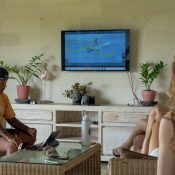
Is there land practice before entering the water? Video analysis after? Surf theory? A beginner who goes straight from the carpark to the ocean without preparation is losing 30% of the session before they even stand up. Structure matters.
What “sessions” actually means
Some camps advertise two sessions per day. For a beginner, two full coached sessions daily is unrealistic — both physically and in terms of wave conditions. Most morning offshore conditions in Canggu deteriorate by 10–11am. Check whether “two sessions” means two coached lessons or one coached lesson and one guided trip to the beach.
What is actually included at the listed price
Some camps list a “from” price that excludes surf lessons — which is the entire reason someone books a surf camp. Always confirm whether the price shown includes coaching, equipment rental, airport transfer, and meals before comparing numbers.
The social environment
The majority of surf camp guests are solo travellers. Whether you make friends — genuine connections you stay in touch with — depends largely on the size of the camp and how it is structured socially. A smaller, tighter camp tends to produce closer friendships.
Quick comparison
| Criteria | Kima | Wavehouse | Lapoint | Sōleïa |
|---|---|---|---|---|
| 7-night price (shared room) | ~€739 | ~€738 | ~€549 | €424 |
| Lessons included at listed price | Guided surf trips included. Coaching add-on. | Yes — coaching included | Yes — coaching included | Yes — coaching included |
| ISA-certified coaching | Not confirmed publicly | Not confirmed publicly | Not confirmed publicly | Yes — ISA-certified |
| Max instructor ratio | 3:1 (Banjar standard) | 2–3:1 (self-stated) | 6:1 at Level 1 | 2–3:1 guaranteed |
| Sessions per day | 2 guided trips daily | 2 coached sessions | 5 coached sessions/week | 1 coached session (3h) + daily land training |
| Video analysis | Yes | Yes | Not listed | Yes |
| Yoga included | Yes (1x daily) | Yes | Yes | Yes (6x/week) |
| Breakfast included | Yes | Yes | Yes | Yes |
| Camp size | Large — 200+ guests | Boutique — ~30 guests | Medium — ~50 guests | Small — ~25 guests |
| Social vibe | Resort-style, independent | Curated, community-focused | International social scene | Close-knit, family atmosphere |
The camps
Kima is the biggest, most established surf camp in Canggu — and probably the most recognised name in Bali surf camps globally. The facilities are premium: three pools including a 5-metre deep diving pool, a 15-metre climbing wall, fully equipped gym, and a large restaurant. The camp can host hundreds of guests across its various accommodation types, from budget dorms to private villas. For surfers who want the hotel-resort experience within a surf context, Kima delivers it consistently.
One distinction worth understanding: Kima's core offering is surf guiding — small groups are taken to the best break for conditions and level, twice daily, seven days a week. The 7-night package includes the 5-day Learn-to-Surf coaching programme for beginners alongside those guided trips. One thing guests mention in reviews is that Kima's instructors operate under a policy that restricts socialising with guests outside of sessions — worth knowing if a closer relationship with coaches is part of what you are looking for.
- Premium facilities at a resort level
- Large groups or those who want lots of social options
- Experienced surfers who want guided wave discovery across Bali
- Wide variety of room types and add-ons
- One of the highest prices on the island
- Large guest numbers mean a less intimate atmosphere
- Guided trips are the core product — coached beginner lessons are a separate programme
Wavehouse occupies a quiet corner of Canggu — rice terrace surroundings, a short walk from Berawa Beach — and describes itself as a boutique surf camp. The design philosophy is visible in everything from the open-air restaurant to the room finishes: natural materials, considered spaces, an aesthetic that sits closer to a design hotel than a traditional surf hostel. Guests consistently praise the food, the yoga programme, and the social atmosphere.
The coaching offer is strong — two sessions daily with a 2–3:1 instructor ratio, video analysis, and theory classes. At roughly €738 for a week, it is one of the higher-priced options in Canggu, and the experience reflects that. If what you are looking for is a curated, high-quality environment where everything has been thought through, Wavehouse delivers that consistently.
- Boutique experience with high attention to design
- Strong coaching structure with twice-daily sessions
- Good food and wellness programme
- Community atmosphere at a manageable scale
- Premium price at the top of the Canggu range
- Two coached sessions daily is ambitious for absolute beginners — confirm how they structure beginner days
Lapoint is a Scandinavian-founded surf camp brand with locations across Europe, Sri Lanka, and Bali. They have built a loyal following — particularly among European solo travellers — around a social formula that works: fixed Monday arrival days so everyone starts together, evening activities built into the week, and a community-first approach to the whole experience. The Canggu camp sits on Echo Beach, one of the more active stretches of the Canggu coastline.
One thing to know before booking: Lapoint's Bali camp has a strong Scandinavian guest base, which is a feature for some travellers and a potential limitation for others. If you are coming from outside that community and hoping for a mixed international crowd, it is worth reading recent reviews to see what the current mix looks like. The social programme is well-organised, and guests consistently praise the atmosphere.
- Strong community focus — social programme is a genuine feature
- Mid-range price with solid inclusions
- Well-organised brand with camps in multiple destinations
- Good for those who want structure to the week
- Strong Scandinavian guest base — language mix can skew
- Level 1 beginner group ratio is 6:1 per instructor
- Fixed Monday arrivals — no flexibility on start day
Sōleïa is smaller than the other camps on this list, and that is deliberate. With around 20 guests at any one time, everyone knows each other within a day — students, coaches, and the team eat together, surf together, and spend the evenings together. For solo travellers who want to genuinely connect rather than simply share a building with strangers, the size of the camp is the single most important factor. At Sōleïa, no one eats alone.
The coaching is built around the SSA progression system — five defined levels with named criteria, assessed daily. Every session has a specific objective, and video analysis connects what happened in the water to what to work on next. All instructors are ISA-certified. The programme runs six days a week, one coached session of three hours per day, supplemented by daily land training — pop-up practice, paddling drills, turning mechanics, video analysis, and surf theory — which is the right amount for a beginner. More than that and the quality drops, either because your body gives out or because the wave conditions no longer suit beginners.
At €424 for a full week all-inclusive, Sōleïa offers the best value for money of any camp on this list. That price is not a “from” price. It is the real price, in high season, for a shared room, with everything included. No board rental on top. No lesson package to add. What you see is what you pay.
- Best value for money on the island — by a significant margin
- ISA-certified coaching and a defined progression system
- Small size creates a genuinely close social atmosphere
- Transparent, all-inclusive pricing with no hidden extras
- Honest daily coaching: 3h, structured, with theory and video analysis
- Smaller facilities than Kima or Wavehouse
- One session per day — right for beginners, but not two daily guided trips
How to choose
The four camps above represent genuine options, not filler. The right choice depends on what you are actually optimising for. Here is a simple framework.
“The ocean is big enough for everyone. Choose the camp that fits who you are, not the one with the best photos.”
One final practical note: all four camps are in Canggu, all within a few kilometres of each other, and all close to the same beginner-friendly breaks. Location is not a differentiating factor at this level. The waves you will learn on are the same. What differs is everything that happens between sessions.
Everything included.
No surprises.
One price. Six days of coached surfing per week, yoga, breakfast, equipment, theory, video analysis, Saturday BBQ, and social events organised throughout the week.
Frequently asked questions
Almost certainly yes — and more easily than most social situations because you are all doing the same thing, at the same level, from day one. Surf camps attract solo travellers by a large majority. The friendships formed tend to be fast and genuine. Smaller camps (Sōleïa, Wavehouse) tend to produce closer groups because everyone knows everyone. At larger camps, you will meet more people but may need to be more proactive about building those connections.
One coached session of two to three hours is the right amount for a beginner. Two full coached sessions per day is physically demanding and also depends on wave conditions being suitable for beginners twice in the same day — which in Canggu is rare. Morning offshore conditions typically deteriorate by mid-morning. Some camps offer two sessions in the sense of one coached lesson plus one guided trip to the beach, which is a different thing.
At minimum: equipment rental, ISA-certified or equivalent coaching, a maximum 3:1 instructor ratio, surf theory, video analysis, and accommodation. A good camp will also run land practice before every water session and give you specific objectives for each day rather than just repeating the same exercises. The progression system matters — you should finish each week knowing exactly what you improved and what to work on next.
April to November is the reliable window. The dry season (April to October) offers the most consistent conditions for beginners — offshore winds in the morning, reliable small to medium swell, warm water. June to August is peak season: excellent conditions but higher prices and more crowded camps. April–May and September–October are the sweet spot — good surf, lower prices, quieter lineups. November sits at the edge of the transition and is generally still fine. December to March is the wet season, and while the surf itself can be excellent — particularly on the East Coast and Nusa Dua, which stay clean and consistent when the West Coast is onshore — there is one real practical issue: plastic pollution. Heavy rains wash enormous volumes of plastic and debris from inland areas into the ocean, and the West Coast beaches (including Canggu) can be severely impacted during these months. It is not dangerous, but it is unpleasant and not the Bali surf experience most people have in mind. At Sōleïa, during the wet season we move sessions to Nusa Dua or the East Coast, where the water stays clean. If you are booking a camp for December to March, ask what their wet-season strategy is.
Yes — it is one of the best places in the world to learn. The beach breaks at Batu Bolong and Berawa are forgiving and consistent, the water is warm, the coaching infrastructure is world-class, and there are waves suitable for every level within a few kilometres of each other. The main caveat for beginners is timing: morning sessions before the onshore wind picks up are significantly better than afternoon sessions.
Reef-safe sunscreen (standard suncream dissolves quickly in salt water and harms coral), a rash guard for longer sessions, flip flops, a reusable water bottle, and a basic first aid kit including antiseptic for reef cuts. Equipment — boards, leashes, fins, wax — will be provided. Leave room in your bag for the inevitable souvenir and the inevitable board wax that gets everywhere.
At Sōleïa the honest answer is: very little. Breakfast, coaching, equipment, and yoga are all included. Evening meals in Canggu range from €3 for a warung to €15 for a restaurant — budget around €10–15 per day for food and drink outside the included meals. Transport is cheap (scooter taxi €1–2 per trip). A week in Canggu outside the camp price costs most people €100–150 in daily spending.